Structural Masonry Special Inspection in Pasadena
You're three weeks into a seismic retrofit on a 1920s commercial building near Old Pasadena, and the structural engineer just called for continuous inspection on the new reinforced CMU shear walls. The grouting crew is scheduled for tomorrow morning, and the City of Pasadena building inspector won't sign off without a qualified special inspector on site. Unlike projects in unincorporated areas that go through LA County, Pasadena runs its own building department — and they enforce their inspection requirements closely. Advantage Special Inspection (ASI) is local to the San Gabriel Valley, ICC-certified, and available seven days a week to keep your project moving.
Schedule your masonry special inspection today — call or text 626-525-1344. Available 7 days a week.
What Is Structural Masonry Special Inspection?
Structural masonry special inspection is a code-mandated quality assurance process required under the California Building Code, Chapter 17 (Section 1705.4). When a project calls for loadbearing or lateral-force-resisting masonry — reinforced CMU block walls, brick veneer with structural ties, or grouted and reinforced retaining walls — a qualified special inspector must verify that the work meets the design documents and applicable standards. The governing standard for masonry construction is TMS 402/602 (formerly ACI 530/ASCE 5), which establishes requirements for materials, design, and construction of masonry structures.
Special inspection under this standard covers several critical checkpoints: verifying that CMU units meet the specified strength and dimensional tolerances, confirming that reinforcement is correctly sized, spaced, and positioned per the structural drawings, observing grout placement to ensure full consolidation in cells and bond beams, and checking mortar joints for proper tooling, thickness, and mortar type compliance (Type S, Type N, or as specified).
In seismically active regions like Pasadena, masonry inspection is especially important. Seismic Design Categories D through F — which apply to most structures in the area — trigger continuous special inspection for grouting operations and periodic inspection for other masonry work. The inspector documents every pour, every lap splice, and every deviation, issuing reports that become part of the permanent project record submitted to the City of Pasadena.
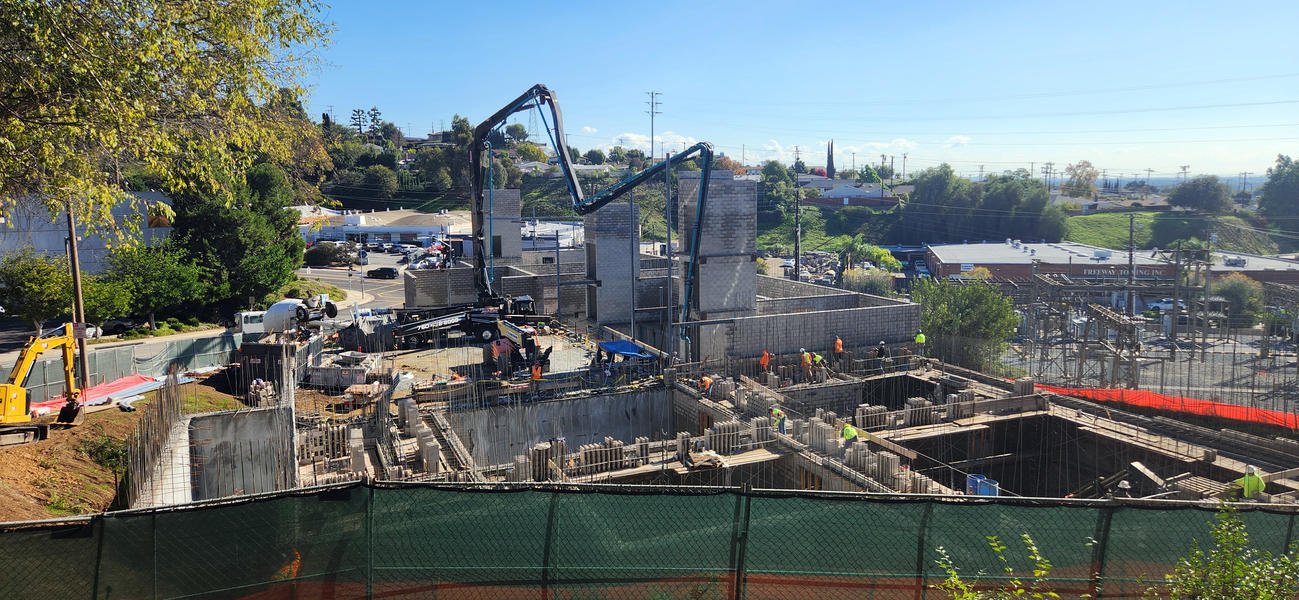
Our Structural Masonry Special Inspection Services in Pasadena
ASI's masonry inspection services follow your project from footings through final grout. Our services include:
Inspection of footings and reinforcing steel placement before concrete is poured
Verification of material deliveries — checking bill of lading and delivery tickets to confirm correct materials on site
Concrete sampling during footing pours when required by the approved plans and Statement of Special Inspections
Fit-up inspection per the Statement of Special Inspections — on site from CMU placement through first lift height (standard or high lift), one to multiple visits as required
Grout pour observation — continuous inspection during grouting operations per CBC Section 1705.4
Repeat inspections for new material deliveries and additional lift heights through completion
Written inspection reports submitted same day or next business day
Need a masonry special inspector in Pasadena this week? Call or text 626-525-1344 — we respond same day, seven days a week.
Why Choose ASI for Masonry Inspection in Pasadena?
Contractors across Pasadena trust ASI because we make the inspection process painless. We show up on time, communicate clearly, and deliver reports fast — so you're never waiting on a special inspection report when the county inspector shows up.
What Contractors Say About ASI
"We do a lot of caisson and footing work, and sometimes the schedule gets tight. I've called ASI at the last minute more than once, and they always find a way to get an inspector out."
— Shawn F., Ford Foundation Drilling
"I've used ASI for just about every type of special inspection — epoxy, rebar, concrete, shear walls, you name it. I recommend them to every project owner."
— Yu Chien L., LandVision
"We use ASI for utility trench pour backs — epoxy anchors, rebar dowels, concrete, torque testing. Their inspectors show up prepared and know exactly what they're looking at."
— Ricardo L., Lugo's Electric
Ready to schedule? Call or text 626-525-1344 — Available 7 days a week.
Types of Projects We Inspect in Pasadena
Pasadena's building landscape is one of the most diverse in the San Gabriel Valley, and masonry inspection needs vary widely depending on the project type.
Historic renovation and adaptive reuse — Pasadena is home to Craftsman bungalows, mid-century commercial buildings, and landmark structures. Seismic retrofits on these older buildings frequently involve new reinforced CMU shear walls, parapet rebuilds, and unreinforced masonry (URM) upgrades that require special inspection.
Seismic retrofit programs — Like many California cities, Pasadena has mandatory seismic retrofit requirements for certain building types. Soft-story retrofits and URM building upgrades often include new masonry elements that trigger CBC Chapter 17 inspection requirements
Commercial and mixed-use construction — New commercial buildings and mixeduse developments along Colorado Boulevard, Lake Avenue, and throughout the city regularly specify reinforced masonry for fire-rated walls, elevator shafts, stairwell enclosures, and retaining structures.
Residential construction — Single-family homes, ADUs, and multi-family projects in Pasadena often include CMU retaining walls, garden walls, and foundation stem walls that require special inspection when they serve a structural function.
Institutional and public projects — Schools, churches, municipal buildings, and healthcare facilities in Pasadena frequently use reinforced masonry for its durability and fire resistance, and these projects carry strict inspection documentation requirements.
Working in Pasadena — What Contractors Need to Know
Pasadena operates its own independent building department, separate from Los Angeles County. All permits, plan checks, and inspections are administered through the city directly.
City of Pasadena Planning & Community Development Department
175 N. Garfield Avenue
Pasadena, CA 91101
Phone: (626) 744-4200
Pasadena's Building and Safety Division handles structural plan review and issues building permits through the city's online permitting portal. For projects requiring special inspection, the city expects the registered special inspection agency to submit a Statement of Special Inspections at the beginning of the project and a Final Special Inspection Report upon completion. Interim reports and non-conformance notices must be filed promptly.
ASI is ICC-certified and registered to perform special inspection services in the City of Pasadena. Our inspectors are familiar with the city's documentation requirements, submission procedures, and the specific expectations of Pasadena's plan review and building inspection staff. We handle the paperwork so you can focus on building.
FAQ's
Do I need a special inspection for my block wall?
Yes, in most cases. CBC Section 1705.4 requires special inspection for structural masonry construction, including reinforced CMU block walls, grouted masonry, and any masonry that is part of the lateral force-resisting system. There are limited exceptions under CBC Section 1704.2 for certain small residential projects, but if your approved plans include a Statement of Special Inspections calling out masonry, you'll need a certified special inspector on site. Fire rebuild projects in Altadena that include structural masonry are no exception — LA County enforces CBC Chapter 17 requirements on all rebuild permits. When in doubt, check your plans or send them to us — we'll tell you.
Who is responsible for hiring and paying for the special inspector?
Under CBC Section 1704.2.1, the project owner or the owner's authorized agent is responsible for retaining the special inspector — not the contractor. The special inspector works as an independent third party, separate from both the contractor and the building department. In practice, contractors often coordinate the scheduling, but the contractual and financial responsibility falls on the owner or their representative (typically the architect or engineer of record).
What's the difference between a special inspection and a city building inspection?
A city building inspection is performed by a municipal building inspector who checks overall code compliance at specific milestones — foundation, framing, final. A special inspection is a separate, independent inspection required under CBC Chapter 17, performed by an ICC-certified special inspector retained by the project owner. Special inspections focus on specific code-critical work — like masonry grout placement, reinforcement, and mortar — that requires continuous or periodic observation beyond what a city inspector covers. You need both: the special inspection report is part of what the city inspector reviews before signing off.
What happens if masonry work is placed without a special inspector on site?
Work performed without required special inspection is considered unapproved work under the building code. The building department can require the work to be exposed, tested, or removed to verify compliance. In some cases, the masonry can be scanned or tested after the fact, but this adds cost and delays — and the results may not satisfy the building official. This is why CBC Chapter 17 requires the inspector to be on site during the work, not after.
Does the special inspector have to be registered with the building department?
Yes. CBC Section 1704.2 requires that the special inspector and the inspection agency be approved by the building official. Registration requirements vary by jurisdiction. ASI handles this process directly so you don't have to.
What happens if the inspector finds a deficiency during the masonry inspection?
The inspector documents the deficiency and notifies the contractor and masonry subcontractor immediately for corrective action. Common deficiencies include incorrect rebar spacing, insufficient grout consolidation, or cleanout issues. If the deficiency can be remedied while the special inspector is still on site, we'll write a completed report and your project keeps moving. If it requires more time than allotted for the inspection, a correction notice will be written and an additional special inspection will need to be scheduled. If the deficiency is not corrected, CBC Section 1704.2.4 requires that the correction notice be escalated to the engineer of record and the building official before that phase of work can be completed.
Ready to schedule? Call or text 626-525-1344 — Available 7 days a week.
Schedule Structural Masonry Special Inspection in Pasadena Today
Whether you're starting a new CMU wall, coordinating a weekend grout pour, or picking up inspection coverage mid-project, ASI is ready to help. We're local to the San Gabriel Valley, ICC-certified, and available seven days a week — including early mornings and holidays when the work doesn't stop.
Don't let inspection scheduling hold up your project. One call or text gets you a confirmed inspector.
Contact Us For A Special Inspection Today! — Call or text us at 626-525-1344
Related Special Inspection Services in Pasadena: Concrete Inspection.